
Pediatric
Colic & Inconsolable Crying
Persistent crying deserves
a thoughtful and careful assessment.
Colic has many possible contributors. We evaluate movement and tension patterns while working within the appropriate pediatric care team.
Serving Whitefish and the Flathead Valley.

The clinical picture
Persistent symptoms have a cause — and it can be identified.
Positioning, gas drops, and formula changes address pieces of the pattern but often miss the underlying contributor. A careful history and gentle examination can identify whether mechanical tension is playing a role.
The witching hour
What colic & inconsolable crying typically feels like day to day.
- Crying for 2–3+ hours at a stretch, often in the evening
- Arching the back and pulling away mid-feed
- Pulling legs to the chest, clenched fists, red face
- Inconsolable even when fed, dry, and held
- Worse on one side or in certain positions
- Trouble settling for sleep after the episode
What this means over time
Caring for an inconsolable infant is exhausting for the entire household, and the standard advice — wait it out — asks families to endure months of it. While colic does resolve with time, identifying and treating contributing tension often shortens the episode pattern considerably. An evaluation offers a way to act rather than simply endure.
Most colic resolves on its own by 3–4 months — but the family doesn't have to wait that long suffering through it. Untreated, the patterns often spill into broken sleep, feeding aversion, and a nervous-system pattern in baby that can take months to unwind.
A precise evaluation is the starting point.
Dr. Smith's examination identifies the specific structures involved, measures how they're functioning, and determines — honestly — whether our care is the right fit for what you're dealing with.
Caregiver observations
Changes families commonly report.
- Everyone in the house braces for evening
- Baby calms briefly in one specific position and nowhere else
- Feeds end with arching, gas, and tears
- You've started avoiding outings during the witching hour
- Older sibling has noticed and is acting out
Causes & clinical context
Understanding what may contribute to colic & inconsolable crying.
Common underlying causes
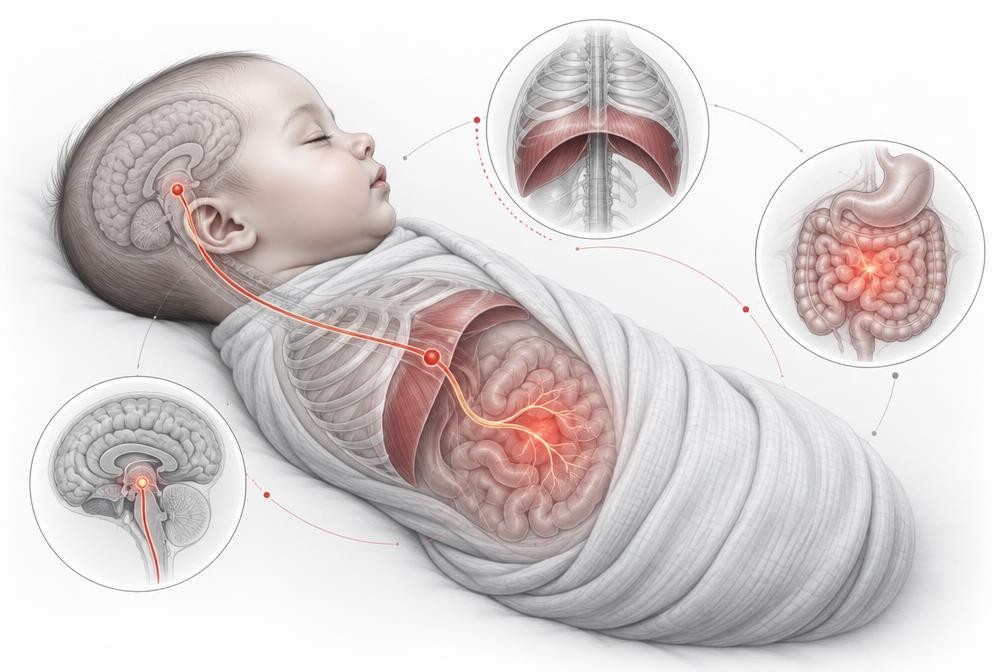
- Upper-cervical and cranial tension from birth affecting nervous-system regulation
- Digestive and reflux patterns tied to nerve and positional tension
- Latch and feeding mechanics swallowing extra air
- Sensory overload by end of day in a still-developing nervous system
What's usually offered — and where it falls short
Gripe water, gas drops, and probiotics
Limit: Help some babies, but treat the gas without addressing the tension and nervous-system regulation underneath.
Formula changes and elimination diets
Limit: Worth trying if a true intolerance is suspected, but often cycled through for weeks without addressing the mechanical piece.
'Just wait it out — it ends at three months'
Limit: True, eventually. Also three months of family exhaustion when gentle care often shortens the cycle dramatically.
Evaluation and care
A plan based on the findings.
- A focused history and examination
- Orthopedic and neurologic screening when indicated
- Care matched to the structures and functional findings involved
- Objective reassessment with referral when appropriate
What to expect
First visit
Examination, findings, and a clear recommendation for the appropriate next step.
During care
Symptoms and function are tracked so the plan can be adjusted as needed.
Reassessment
Progress is measured rather than assumed, with referral when goals are not being met.
How Dr. Smith treats this differently
Our Colic Relief approach for Colic & Inconsolable Crying.
Gentle pediatric chiropractic care focused on the upper-cervical and cranial tension patterns commonly associated with infant colic, reflux, and inconsolable crying.
Explore the Colic Relief ProgramCommon Questions
Frequently Asked Questions
Stop living around colic & inconsolable crying.
Start with a $47 new patient evaluation and we'll tell you honestly whether we can help.