
Foot
Plantar Fasciitis
Your first steps should not be
the hardest part of the day.
Persistent heel pain can change how you stand, walk, and stay active. Evaluating foot mechanics and daily loading helps guide a practical recovery plan.
Serving Whitefish and the Flathead Valley.

The clinical picture
Persistent symptoms have a cause — and it can be identified.
Inserts, splints, and stretching address load and comfort, but they don't actively stimulate the damaged tissue to repair. When the injury is treated directly — with shockwave, targeted soft-tissue work, and correction of foot mechanics — the tissue can heal rather than merely be managed.
The first step out of bed
What plantar fasciitis typically feels like day to day.
- Sharp heel pain on the first steps out of bed
- Pain standing up after sitting at a desk
- Aching arch after long days on your feet
- Pain in certain shoes that didn't used to bother you
- Flares with hiking, running, or long walks
What this means over time
Heel pain changes how you move through the day long before it forces you to stop: shorter walks, more sitting, less activity overall. Left unaddressed, the gait changes that protect the heel commonly produce secondary knee, hip, and low-back problems. Treating the fascia early prevents that cascade.
Plantar fascia injuries that drag on for months don't always heal on their own — the tissue scars, the gait changes, and the chronic protection patterns start showing up in the knee, hip, and low back. A six-month problem can quietly become a multi-year one.
A precise evaluation is the starting point.
Dr. Smith's examination identifies the specific structures involved, measures how they're functioning, and determines — honestly — whether our care is the right fit for what you're dealing with.
Causes & clinical context
Understanding what may contribute to plantar fasciitis.
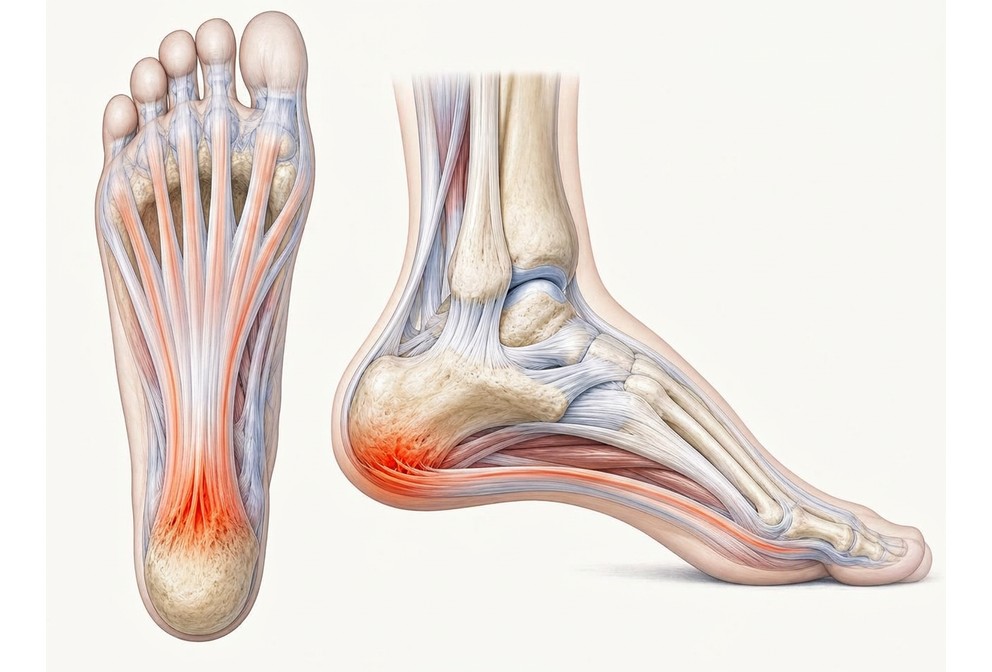
Common underlying causes
- Repetitive micro-tearing of the plantar fascia under daily load
- Foot mechanics — flat arches, high arches, or overpronation
- Tight calves and Achilles pulling on the heel attachment
- Sudden increases in walking, standing, or training volume
- Footwear that doesn't support how your foot actually moves
What's usually offered — and where it falls short
Cortisone injections into the heel
Limit: Can reduce pain short-term but weaken the fascia and have a documented risk of rupture, especially with repeated use.
Orthotics alone
Limit: Helpful as part of a plan, but rarely heal the damaged tissue on their own — they manage load, they don't stimulate repair.
Wait it out
Limit: A meaningful percentage of plantar fasciitis cases become chronic when they're never actively treated. Time alone is not a treatment plan.
Evaluation and care
A plan based on the findings.
- A focused history and examination
- Orthopedic and neurologic screening when indicated
- Care matched to the structures and functional findings involved
- Objective reassessment with referral when appropriate
What to expect
First visit
Examination, findings, and a clear recommendation for the appropriate next step.
During care
Symptoms and function are tracked so the plan can be adjusted as needed.
Reassessment
Progress is measured rather than assumed, with referral when goals are not being met.
How Dr. Smith treats this differently
Our Plantar Fasciitis approach for Plantar Fasciitis.
Sanuwave shockwave therapy, foot-mechanics correction, and calf and arch rehab for chronic heel pain and plantar fasciitis that hasn't resolved with rest or orthotics alone.
Explore the Plantar Fasciitis ProgramCommon Questions
Frequently Asked Questions
Stop living around plantar fasciitis.
Start with a $47 new patient evaluation and we'll tell you honestly whether we can help.