
Spine
Back Pain
Back pain may be common,
but it should never be treated as one-size-fits-all.
Whether discomfort began suddenly or developed over time, the right plan starts by understanding how your spine moves and what aggravates it.
Serving Whitefish and the Flathead Valley.

The clinical picture
Persistent symptoms have a cause — and it can be identified.
Back pain is not one diagnosis. Similar symptoms can come from joint restriction, disc loading, muscular strain, or nerve irritation, so the location of pain alone does not determine the right treatment. Dr. Smith evaluates movement, strength, reflexes, sensation, and aggravating activities to clarify the likely source.
Recognizing the signs
What back pain typically feels like day to day.
- Pain or stiffness after sitting or driving
- A sharp catch with bending, lifting, or standing
- Muscle tightness or spasm
- Pain that spreads into the hip or leg
- Difficulty getting comfortable in bed
What this means over time
Persistent back pain can reduce tolerance for work, chores, travel, exercise, and time outdoors. The practical goal of evaluation is to identify what is limiting function and whether conservative care is appropriate.
Some episodes settle with time, while recurring or progressive symptoms may reflect a mechanical problem that continues to be aggravated. Increasing weakness, numbness, or bowel or bladder changes require prompt medical evaluation.
A precise evaluation is the starting point.
Dr. Smith's examination identifies the specific structures involved, measures how they're functioning, and determines — honestly — whether our care is the right fit for what you're dealing with.
Causes & clinical context
Understanding what may contribute to back pain.
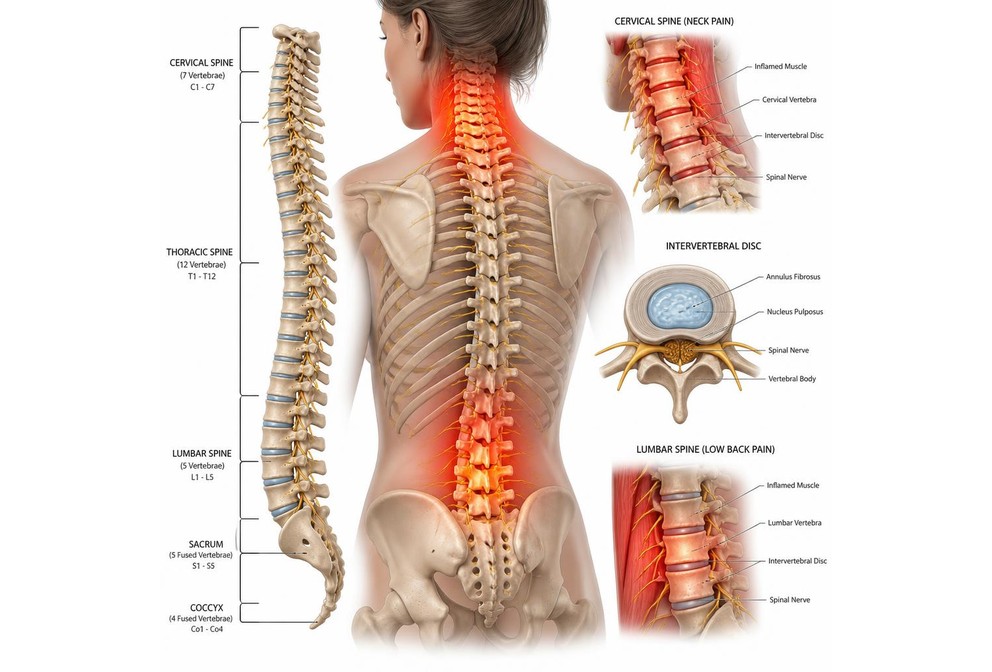
Common underlying causes
- Lumbar or thoracic joint irritation
- Disc strain or degeneration
- Muscle strain and reduced trunk endurance
- Nerve-root irritation
- Repetitive lifting, prolonged sitting, or prior injury
What's usually offered — and where it falls short
Rest and pain medication
Limit: May calm a flare without identifying why symptoms return.
Generic exercise
Limit: Exercises work best when matched to the involved structure and current capacity.
Evaluation and care
A plan based on the findings.
- Orthopedic and neurologic examination
- Chiropractic care when joint restriction is present
- Non-surgical decompression for appropriate disc-related patterns
- Progressive mobility and strengthening
What to expect
First visit
A focused history and examination identify the likely source and screen for findings that need referral.
Early care
Treatment is matched to the exam findings, with symptoms and function tracked rather than assumed.
Reassessment
Progress is measured and the plan is continued, changed, or referred when appropriate.
How Dr. Smith treats this differently
Our Back & Neck Relief approach for Back Pain.
Exam-driven chiropractic care, soft-tissue work, and corrective rehab for chronic back and neck pain — built around the specific segment driving the problem.
Explore the Back & Neck Relief ProgramCommon Questions
Frequently Asked Questions
Related conditions
Clinical note: Sudden severe back pain with fever, major trauma, progressive weakness, or loss of bladder or bowel control requires urgent medical evaluation.
Stop living around back pain.
Start with a $47 new patient evaluation and we'll tell you honestly whether we can help.