
Pediatric
Recurring Ear Infections
Recurring ear discomfort calls for
appropriate medical and musculoskeletal evaluation.
Ear infections require pediatric medical care. A gentle chiropractic assessment may also identify neck or jaw restrictions affecting comfort and movement.
Serving Whitefish and the Flathead Valley.

The clinical picture
Persistent symptoms have a cause — and it can be identified.
Upper-cervical and cranial tension can restrict Eustachian tube drainage, and this contribution is rarely evaluated before surgical options are recommended. Assessing it is a reasonable step before consenting to tubes.
The pattern
What recurring ear infections typically feels like day to day.
- Multiple ear infections in a single year
- Tugging or rubbing at one or both ears
- Fever, fussiness, and broken sleep with each episode
- Fluid lingering in the ears even between infections
- Mild hearing changes or speech delays from chronic fluid
- Conversation with the pediatrician about ear tubes
What this means over time
Repeated antibiotic exposure during the years when a child's gut and immune systems are developing raises legitimate questions. Addressing the drainage pattern that keeps fluid in the ears — alongside your pediatrician's management of acute infections — often reduces the frequency of the cycle itself. That's a conversation worth having before surgery is scheduled.
Chronic ear fluid and recurring infections often lead to ear tubes, speech delays, and repeated antibiotic exposure during the years gut and immune systems are forming. The drainage and upper-cervical contributions are rarely evaluated before that path is recommended.
A precise evaluation is the starting point.
Dr. Smith's examination identifies the specific structures involved, measures how they're functioning, and determines — honestly — whether our care is the right fit for what you're dealing with.
Caregiver observations
Changes families commonly report.
- You can predict the start of an infection by their mood
- Daycare keeps sending them home
- They've started saying 'what?' a lot
- Speech has plateaued during a long fluid stretch
- You're rearranging work around another pediatrician visit
Causes & clinical context
Understanding what may contribute to recurring ear infections.
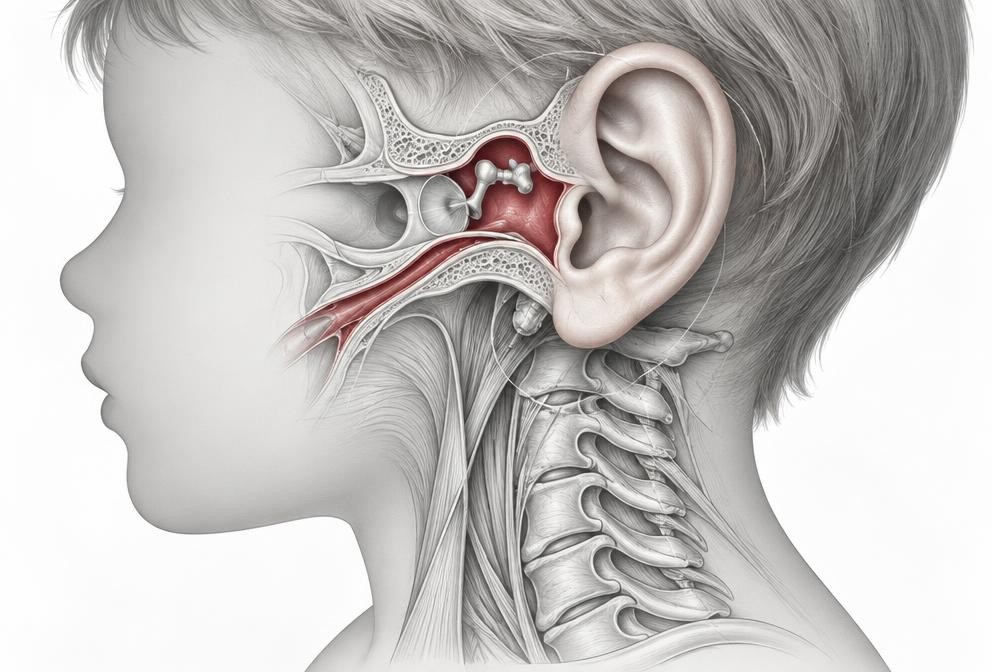
Common underlying causes
- Eustachian tube drainage restricted by upper-cervical and cranial tension
- Immature ear anatomy in babies and toddlers
- Allergies and inflammation contributing to chronic fluid
- Repeat infections that never fully clear between rounds
What's usually offered — and where it falls short
Repeat antibiotic rounds
Limit: Treat the current infection without addressing the drainage pattern that keeps fluid sitting in the ear.
Ear tubes (myringotomy)
Limit: Helps drainage mechanically, but is a surgical step often recommended before gentle non-surgical options have had a fair trial.
'They'll outgrow it'
Limit: Many kids do — after months of pain, antibiotics, and missed school. Addressing drainage early often shortens the cycle.
Evaluation and care
A plan based on the findings.
- A focused history and examination
- Orthopedic and neurologic screening when indicated
- Care matched to the structures and functional findings involved
- Objective reassessment with referral when appropriate
What to expect
First visit
Examination, findings, and a clear recommendation for the appropriate next step.
During care
Symptoms and function are tracked so the plan can be adjusted as needed.
Reassessment
Progress is measured rather than assumed, with referral when goals are not being met.
How Dr. Smith treats this differently
Our Ear Infection Care approach for Recurring Ear Infections.
Gentle pediatric chiropractic care that supports Eustachian tube drainage and reduces the cycle of recurring ear infections — without medications.
Explore the Ear Infection Care ProgramCommon Questions
Frequently Asked Questions
Stop living around recurring ear infections.
Start with a $47 new patient evaluation and we'll tell you honestly whether we can help.