
Joint
Tennis Elbow
Grip and lift
without being limited by outer-elbow pain.
Tennis elbow often develops through repeated gripping and loading—not only racquet sports. The right plan addresses both tendon capacity and the demands placed on it.
Serving Whitefish and the Flathead Valley.

The clinical picture
Persistent symptoms have a cause — and it can be identified.
Braces and rest reduce symptoms without restarting tendon repair, and cortisone provides short-term relief at the cost of tendon integrity. Resolving it requires progressive loading of the tendon, often with shockwave therapy, and correction of the mechanics that keep re-irritating it.
The coffee cup test
What tennis elbow typically feels like day to day.
- Pain on the outside of the elbow that worsens with gripping
- Weakness shaking hands, turning a doorknob, or lifting a milk jug
- Burning ache after typing, mousing, or framing work
- Tenderness when pressing on the bony bump on the outside of the elbow
- Pain that returns the moment you go back to your activity
What this means over time
Chronic elbow pain is limiting out of proportion to how minor it sounds: carrying groceries, shaking hands, and recreational activities all become unreliable. The condition is also progressive — tendon tissue that never completes its repair degenerates further over time. Treating it properly now prevents months or years of accumulating limitation.
Tendons that stay irritated stop trying to repair. What started as a flare becomes chronic tendinopathy — degenerative tissue that no amount of rest will fix on its own. Months turn into years, and the window for non-surgical repair narrows.
A precise evaluation is the starting point.
Dr. Smith's examination identifies the specific structures involved, measures how they're functioning, and determines — honestly — whether our care is the right fit for what you're dealing with.
Causes & clinical context
Understanding what may contribute to tennis elbow.
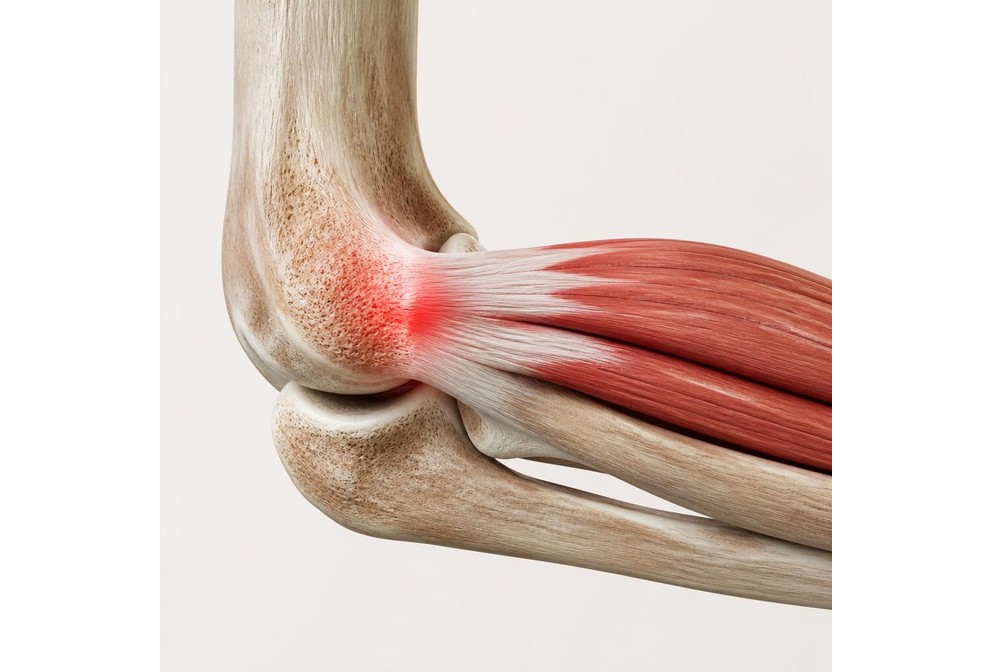
Common underlying causes
- Repetitive gripping from sports, trades, fly fishing, or keyboard work
- Overload of the forearm extensor tendons at the lateral elbow
- Upstream contributions from the shoulder, neck, or posture
- Failed tendon repair after an early flare was ignored or only rested
- Sudden return to activity after a long layoff
What's usually offered — and where it falls short
Tennis-elbow braces and rest
Limit: Can quiet symptoms short-term but rarely restart real tendon repair — so the pain returns the moment you go back to your activity.
Cortisone injections
Limit: Calm pain for weeks to months while weakening the surrounding tendon — and the pain almost always returns, often worse.
Tennis-elbow release surgery
Limit: Real option for the right candidate, but frequently offered before shockwave, soft-tissue, and loaded rehab have had a fair trial.
Evaluation and care
A plan based on the findings.
- A focused history and examination
- Orthopedic and neurologic screening when indicated
- Care matched to the structures and functional findings involved
- Objective reassessment with referral when appropriate
What to expect
First visit
Examination, findings, and a clear recommendation for the appropriate next step.
During care
Symptoms and function are tracked so the plan can be adjusted as needed.
Reassessment
Progress is measured rather than assumed, with referral when goals are not being met.
How Dr. Smith treats this differently
Our Tennis Elbow Therapy approach for Tennis Elbow.
A structured non-surgical program for lateral epicondylitis combining shockwave therapy, soft-tissue work, and targeted forearm and shoulder rehab.
Explore the Tennis Elbow Therapy ProgramCommon Questions
Frequently Asked Questions
Stop living around tennis elbow.
Start with a $47 new patient evaluation and we'll tell you honestly whether we can help.