
Nerve
Carpal Tunnel
Numb hands can disrupt
sleep, work, and the tasks that require precision.
Tingling, weakness, and nighttime symptoms may involve the median nerve at the wrist, but the neck and arm should also be considered.
Serving Whitefish and the Flathead Valley.

The clinical picture
Persistent symptoms have a cause — and it can be identified.
What's often overlooked is that the nerve travels from the neck to the fingertips, and irritation anywhere along that path contributes to symptoms. A complete nerve evaluation — not just a wrist-level assessment — is what determines whether surgery is actually necessary.
The 3 a.m. shake-out
What carpal tunnel typically feels like day to day.
- Hand numbness or tingling that wakes you at night
- Dropping coffee cups, pens, or keys
- Numb fingers after driving or typing for 20+ minutes
- Weakness with grip and pinch tasks
- Symptoms in the thumb, index, and middle fingers
What this means over time
Loss of grip strength and hand function affects work, daily tasks, and independence in ways that are easy to underestimate until they occur. Equally important is what prolonged compression does to the nerve itself: continued pressure leads to lasting numbness and muscle wasting that are difficult to reverse. Evaluating the full nerve pathway early gives you the best chance of resolving this without surgery.
A compressed median nerve that stays compressed eventually loses fibers it doesn't get back. Thenar muscle wasting, lasting numbness, and grip weakness are the cost of waiting — and post-surgical recovery is much harder when the nerve has been under pressure for years.
A precise evaluation is the starting point.
Dr. Smith's examination identifies the specific structures involved, measures how they're functioning, and determines — honestly — whether our care is the right fit for what you're dealing with.
Causes & clinical context
Understanding what may contribute to carpal tunnel.
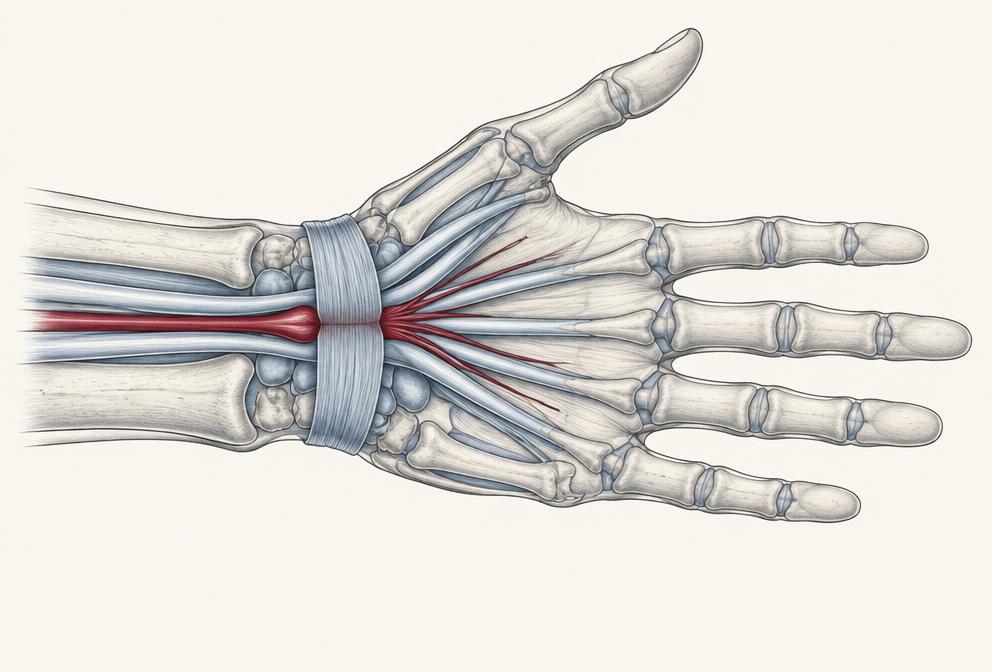
Common underlying causes
- Median nerve compression at the wrist from repetitive flexion and gripping
- Nerve irritation higher up — at the neck, shoulder, or forearm — adding to wrist symptoms
- Inflammation and swelling inside the carpal tunnel itself
- Postural patterns (forward head, rounded shoulders) that load the nerve along its full path
- Conditions like thyroid disease, diabetes, or pregnancy that increase nerve sensitivity
What's usually offered — and where it falls short
Wrist splints alone
Limit: Can reduce night symptoms short-term but don't address upstream compression from the neck, shoulder, or forearm — so progress plateaus.
Cortisone injections at the wrist
Limit: Calm inflammation for weeks to months without changing the mechanics that produced it, and repeated injections weaken the surrounding tissue.
Carpal tunnel release surgery
Limit: Has real outcomes for the right candidate, but is frequently offered before the cervical, shoulder, and forearm contributions have been properly evaluated and treated.
Evaluation and care
A plan based on the findings.
- A focused history and examination
- Orthopedic and neurologic screening when indicated
- Care matched to the structures and functional findings involved
- Objective reassessment with referral when appropriate
What to expect
First visit
Examination, findings, and a clear recommendation for the appropriate next step.
During care
Symptoms and function are tracked so the plan can be adjusted as needed.
Reassessment
Progress is measured rather than assumed, with referral when goals are not being met.
How Dr. Smith treats this differently
Our Carpal Tunnel approach for Carpal Tunnel.
A non-surgical care program for median-nerve symptoms in the hand: chiropractic care for the neck and shoulder, soft-tissue work along the nerve path, and targeted rehab.
Explore the Carpal Tunnel ProgramCommon Questions
Frequently Asked Questions
Stop living around carpal tunnel.
Start with a $47 new patient evaluation and we'll tell you honestly whether we can help.