
Spine
Degenerative Disc Disease
Disc changes on imaging
do not define your ability to move.
Degeneration is common, and it does not always explain pain. Care should be based on how your imaging, symptoms, and examination findings fit together.
Serving Whitefish and the Flathead Valley.

The clinical picture
Persistent symptoms have a cause — and it can be identified.
Disc degeneration is common on imaging and does not always cause pain. Exam findings must match the symptom pattern before a disc is treated as the likely source.
Recognizing the signs
What degenerative disc disease typically feels like day to day.
- Back or neck stiffness after inactivity
- Pain aggravated by sitting, bending, or lifting
- Symptoms that improve with changing position
- Arm or leg pain when a nerve is irritated
- Reduced tolerance for repeated loading
What this means over time
An imaging report can sound alarming, but structural change and pain are not the same thing. The practical question is which findings match your function and can be addressed conservatively.
Symptoms may fluctuate even when imaging does not change. Progressive weakness, spreading numbness, balance changes, or bowel or bladder symptoms require prompt medical evaluation.
A precise evaluation is the starting point.
Dr. Smith's examination identifies the specific structures involved, measures how they're functioning, and determines — honestly — whether our care is the right fit for what you're dealing with.
Causes & clinical context
Understanding what may contribute to degenerative disc disease.
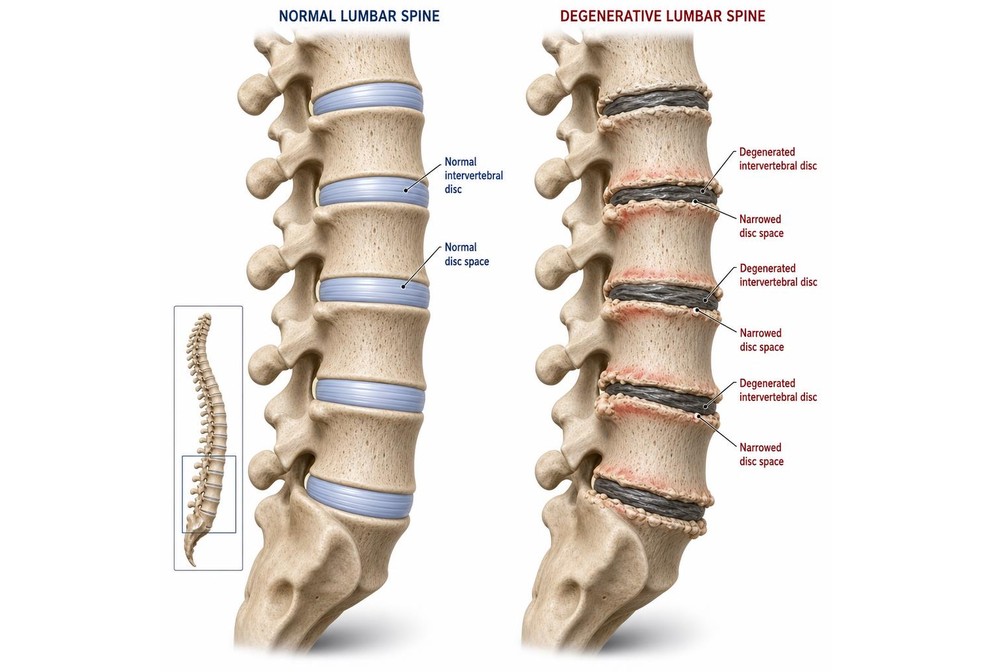
Common underlying causes
- Age-related disc dehydration
- Accumulated loading and prior injury
- Reduced spinal mobility
- Poor load tolerance
- Associated joint or nerve irritation
What's usually offered — and where it falls short
Medication
Limit: Can help a flare but does not improve movement capacity.
Surgery based on imaging alone
Limit: Imaging findings must be matched to symptoms; many cases are first managed conservatively.
Evaluation and care
A plan based on the findings.
- Neurologic and mechanical examination
- Review of relevant imaging
- Non-surgical decompression for appropriate cases
- Chiropractic and rehabilitation support for surrounding mechanics
What to expect
First visit
A focused history and examination identify the likely source and screen for findings that need referral.
Early care
Treatment is matched to the exam findings, with symptoms and function tracked rather than assumed.
Reassessment
Progress is measured and the plan is continued, changed, or referred when appropriate.
How Dr. Smith treats this differently
Our Disc Treatment approach for Degenerative Disc Disease.
Disc-specific spinal decompression, anti-inflammatory care, and stabilization rehab for bulging, herniated, or degenerative discs in the low back or neck.
Explore the Disc Treatment ProgramCommon Questions
Frequently Asked Questions
Related conditions
Clinical note: Treatment cannot reverse age-related disc degeneration. Progressive weakness or bowel or bladder changes require urgent medical evaluation.
Stop living around degenerative disc disease.
Start with a $47 new patient evaluation and we'll tell you honestly whether we can help.