
Active Care
Sports Injuries
Recover with a plan built
for the activity you want to return to.
Sports injuries require more than waiting for pain to fade. Evaluation, load management, and measurable progress help support a confident return.
Serving Whitefish and the Flathead Valley.

The clinical picture
Persistent symptoms have a cause — and it can be identified.
Pain after activity can reflect a minor overload, but instability, substantial swelling, inability to bear weight, or sudden weakness can indicate a more significant injury. The examination determines whether conservative care is appropriate.
Recognizing the signs
What sports injuries typically feels like day to day.
- Pain during or after activity
- Swelling or stiffness
- Reduced strength or confidence
- Symptoms returning at the same training threshold
- Difficulty with uneven ground, turns, or impact
What this means over time
A safe return is more than the absence of pain. Strength, control, range of motion, and tolerance for the activity all need to recover.
Training through altered mechanics can shift load to another area. Suspected fracture, dislocation, or major ligament injury requires imaging and medical care.
A precise evaluation is the starting point.
Dr. Smith's examination identifies the specific structures involved, measures how they're functioning, and determines — honestly — whether our care is the right fit for what you're dealing with.
Causes & clinical context
Understanding what may contribute to sports injuries.
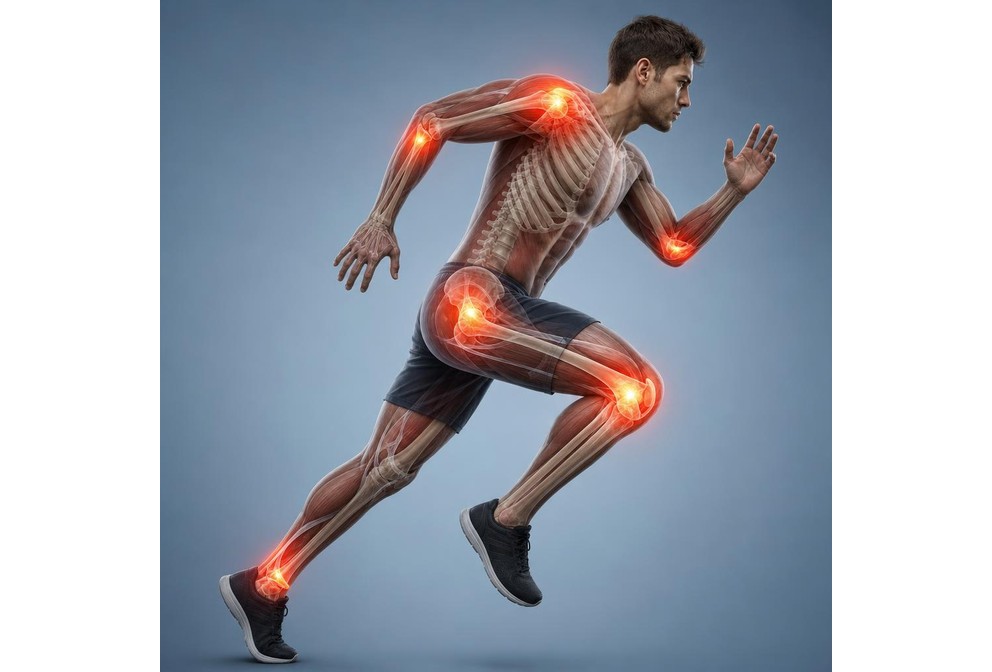
Common underlying causes
- Acute sprain or strain
- Training-load increase
- Reduced mobility or strength
- Incomplete recovery from prior injury
- Equipment, surface, or technique changes
What's usually offered — and where it falls short
Rest until pain stops
Limit: Pain may settle before strength and capacity are restored.
Returning by date alone
Limit: Readiness is better judged with movement and load criteria.
Evaluation and care
A plan based on the findings.
- Injury-specific examination
- Joint and soft-tissue care when indicated
- Progressive rehabilitation
- Return-to-activity testing and referral when needed
What to expect
First visit
A focused history and examination identify the likely source and screen for findings that need referral.
Early care
Treatment is matched to the exam findings, with symptoms and function tracked rather than assumed.
Reassessment
Progress is measured and the plan is continued, changed, or referred when appropriate.
How Dr. Smith treats this differently
Our Rehab & Movement approach for Sports Injuries.
Targeted rehab and movement coaching integrated with chiropractic, decompression, shockwave, or neuropathy care to keep results from sliding back.
Explore the Rehab & Movement ProgramCommon Questions
Frequently Asked Questions
Related conditions
Clinical note: Suspected fracture, dislocation, major ligament rupture, concussion, or inability to bear weight requires urgent medical evaluation.
Stop living around sports injuries.
Start with a $47 new patient evaluation and we'll tell you honestly whether we can help.