
Joint
Rotator Cuff Injuries
Shoulder strength matters
from daily reaching to outdoor recreation.
Rotator cuff symptoms range from tendon irritation to a significant tear. Strength and motion testing help determine the appropriate next step.
Serving Whitefish and the Flathead Valley.

The clinical picture
Persistent symptoms have a cause — and it can be identified.
Painful reaching does not always mean a torn tendon, and a tear cannot be graded from symptoms alone. Strength testing, range of motion, and orthopedic tests help establish the next appropriate step.
Recognizing the signs
What rotator cuff injuries typically feels like day to day.
- Pain reaching overhead or behind the back
- Weakness lifting away from the body
- Night pain on the affected side
- A painful arc through shoulder motion
- Difficulty with work or recreation above shoulder height
What this means over time
Shoulder weakness can affect dressing, household tasks, work, fishing, climbing, and sleep. Care should be matched to the suspected grade of injury rather than based on pain alone.
Persistent weakness or loss of motion should be assessed. Sudden weakness after trauma or inability to raise the arm may indicate a significant tear requiring imaging.
A precise evaluation is the starting point.
Dr. Smith's examination identifies the specific structures involved, measures how they're functioning, and determines — honestly — whether our care is the right fit for what you're dealing with.
Causes & clinical context
Understanding what may contribute to rotator cuff injuries.
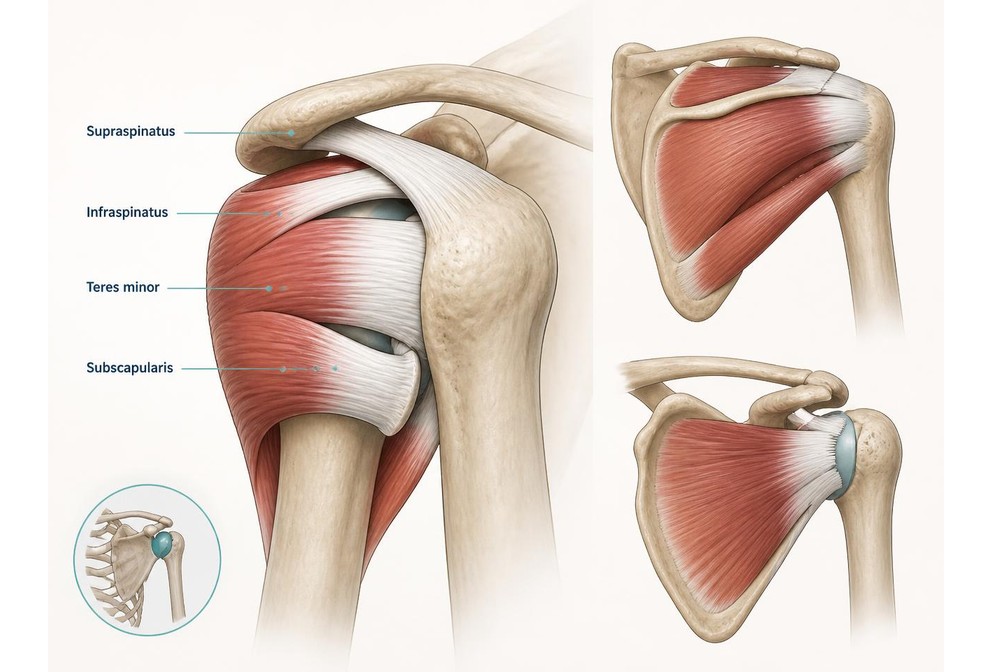
Common underlying causes
- Repetitive overhead loading
- Age-related tendon change
- Acute fall or lifting injury
- Shoulder-blade and joint mechanics
- Chronic tendon overload
What's usually offered — and where it falls short
Rest and anti-inflammatory medication
Limit: May reduce irritability without rebuilding tendon capacity.
Cortisone injection
Limit: Can provide short-term relief but does not restore strength or confirm tear severity.
Evaluation and care
A plan based on the findings.
- Orthopedic shoulder examination
- Imaging referral when a significant tear is suspected
- Shockwave therapy for selected tendinopathy
- Progressive rotator cuff and shoulder-blade rehabilitation
What to expect
First visit
A focused history and examination identify the likely source and screen for findings that need referral.
Early care
Treatment is matched to the exam findings, with symptoms and function tracked rather than assumed.
Reassessment
Progress is measured and the plan is continued, changed, or referred when appropriate.
How Dr. Smith treats this differently
Our Shoulder Therapy approach for Rotator Cuff Injuries.
A structured non-surgical shoulder program combining shockwave therapy, joint mobilization, and rotator-cuff rehab to restore reach, strength, and side-sleeping.
Explore the Shoulder Therapy ProgramCommon Questions
Frequently Asked Questions
Related conditions
Clinical note: A suspected full-thickness tear, fracture, or dislocation requires imaging and possible orthopedic care. Conservative treatment does not reconnect a fully ruptured tendon.
Stop living around rotator cuff injuries.
Start with a $47 new patient evaluation and we'll tell you honestly whether we can help.