
Joint
Joint Pain
Comfortable movement begins
with understanding the joint involved.
Joint pain may reflect irritation, restricted motion, previous injury, or changes in surrounding muscles and tendons. A focused evaluation helps sort out the difference.
Serving Whitefish and the Flathead Valley.

The clinical picture
Persistent symptoms have a cause — and it can be identified.
Tendons, bursae, and ligaments have specific healing requirements: progressive loading, inflammation control, and correction of the mechanics that keep re-irritating the tissue. When those aren't addressed, an ordinary six-week injury can persist for months.
Not arthritis — but not gone, either
What joint pain typically feels like day to day.
- Aching or sharp pain in a single joint that won't fully resolve
- Swelling, warmth, or tenderness around a tendon or bursa
- Pain with specific movements (lifting, twisting, climbing)
- Stiffness after sitting that eases once you move
- A flare you can trace back to one event — but never finished healing
What this means over time
Pain that lingers in a single joint leads to guarding and compensation — favoring one side, avoiding specific movements, and quietly shifting load to the joints above and below. That pattern is worth interrupting early, both to restore the injured tissue and to prevent secondary problems from developing. A targeted examination identifies exactly which structure is at fault.
Soft-tissue injuries that drag on don't always heal on their own — irritated tendons scar, bursae stay inflamed, and the joint mechanics around them quietly change. What started as one cranky joint becomes a compensation pattern that overloads the joints above and below it.
A precise evaluation is the starting point.
Dr. Smith's examination identifies the specific structures involved, measures how they're functioning, and determines — honestly — whether our care is the right fit for what you're dealing with.
Causes & clinical context
Understanding what may contribute to joint pain.
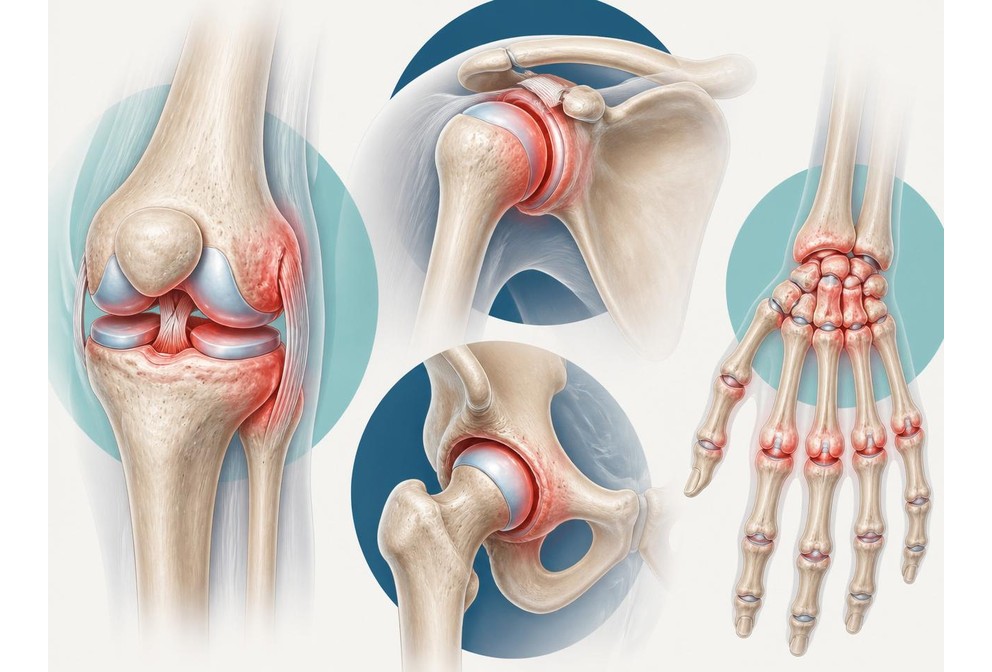
Common underlying causes
- Tendinopathy from repetitive load or sudden volume increase
- Bursitis from prolonged compression or postural strain
- Sprain or strain that healed incompletely
- Muscle imbalances loading the joint unevenly
- Low-grade inflammation the body hasn't cleared
What's usually offered — and where it falls short
Rest, ice, and ibuprofen
Limit: Buys time without actively stimulating the tissue to repair. A meaningful share of these injuries stall instead of resolving.
Cortisone injections
Limit: Calm inflammation for weeks to months without changing the underlying mechanics — and repeat injections weaken the very tendon you're trying to save.
'Stop doing what hurts'
Limit: Reasonable in the short term, but long-term avoidance just deconditions the joint and grows the compensation pattern.
Evaluation and care
A plan based on the findings.
- A focused history and examination
- Orthopedic and neurologic screening when indicated
- Care matched to the structures and functional findings involved
- Objective reassessment with referral when appropriate
What to expect
First visit
Examination, findings, and a clear recommendation for the appropriate next step.
During care
Symptoms and function are tracked so the plan can be adjusted as needed.
Reassessment
Progress is measured rather than assumed, with referral when goals are not being met.
How Dr. Smith treats this differently
Our Joint Pain Therapy approach for Joint Pain.
Shockwave therapy, joint mobilization, and corrective rehab for tendinopathies, bursitis, sprains, and post-injury joint pain that's lingered past its welcome.
Explore the Joint Pain Therapy ProgramCommon Questions
Frequently Asked Questions
Stop living around joint pain.
Start with a $47 new patient evaluation and we'll tell you honestly whether we can help.