
Joint
Knee Arthritis
Arthritis changes the joint,
but function can still be addressed.
A careful assessment can identify where mobility, strength, and load management may improve daily comfort despite structural knee changes.
Serving Whitefish and the Flathead Valley.

The clinical picture
Persistent symptoms have a cause — and it can be identified.
Knee arthritis can coexist with weakness, reduced mobility, and irritated surrounding tendons. The examination and available imaging help determine which limitations may respond to conservative care and when orthopedic consultation is more appropriate.
Recognizing the signs
What knee arthritis typically feels like day to day.
- Morning or start-up stiffness
- Grinding or creaking
- Swelling after activity
- Pain on stairs, slopes, or uneven ground
- Reduced tolerance for walking or skiing
What this means over time
The diagnosis does not automatically determine current function. Strength, mobility, body mechanics, and symptom irritability all influence what activities remain manageable.
Arthritis can progress at different rates. Maintaining appropriate movement and strength is often important, while increasing instability, locking, or rapid loss of function warrants further evaluation.
A precise evaluation is the starting point.
Dr. Smith's examination identifies the specific structures involved, measures how they're functioning, and determines — honestly — whether our care is the right fit for what you're dealing with.
Causes & clinical context
Understanding what may contribute to knee arthritis.
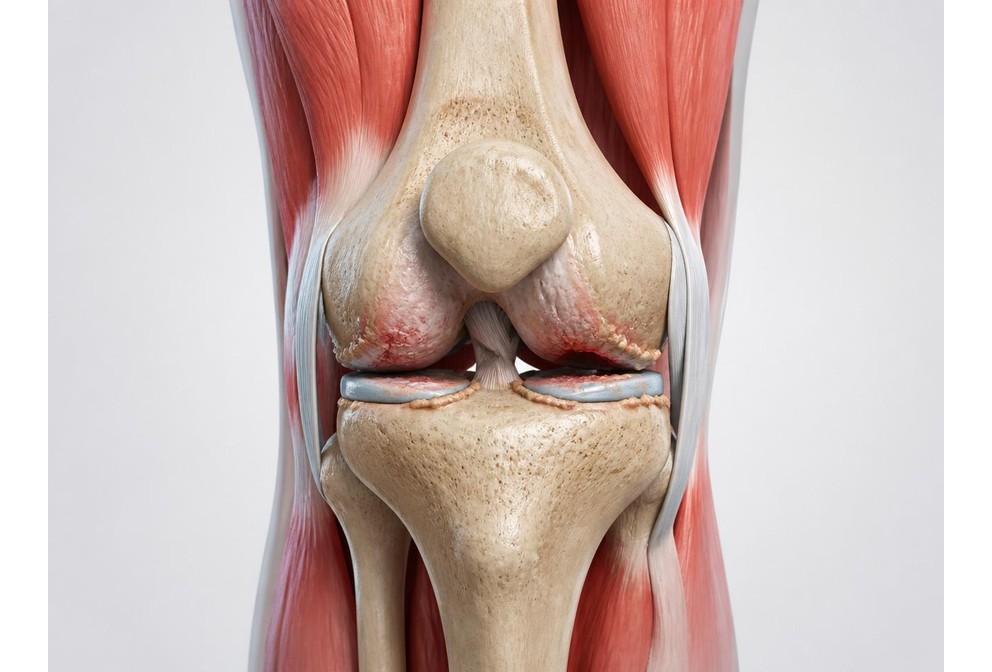
Common underlying causes
- Age-related cartilage change
- Previous meniscus or ligament injury
- Repetitive joint loading
- Reduced hip and leg strength
- Inflammatory or post-traumatic arthritis
What's usually offered — and where it falls short
Medication or injections
Limit: May reduce symptoms temporarily but does not restore strength or movement capacity.
Avoiding activity
Limit: Too little movement can increase stiffness and deconditioning.
Evaluation and care
A plan based on the findings.
- Examination and imaging review
- Joint mobilization when appropriate
- Care for surrounding soft-tissue irritation
- Strengthening to improve load tolerance
What to expect
First visit
A focused history and examination identify the likely source and screen for findings that need referral.
Early care
Treatment is matched to the exam findings, with symptoms and function tracked rather than assumed.
Reassessment
Progress is measured and the plan is continued, changed, or referred when appropriate.
How Dr. Smith treats this differently
Our Arthritis Care approach for Knee Arthritis.
Shockwave therapy, joint mobilization, inflammation guidance, and strength work for knees, hips, shoulders, hands, and spine affected by osteoarthritis.
Explore the Arthritis Care ProgramCommon Questions
Frequently Asked Questions
Related conditions
Clinical note: Conservative care does not regrow cartilage or reverse structural arthritis. Advanced changes, marked instability, or persistent loss of function may require orthopedic consultation.
Stop living around knee arthritis.
Start with a $47 new patient evaluation and we'll tell you honestly whether we can help.