
Spine
Neck Pain
Turn, work, and rest
without planning around neck pain.
Neck stiffness and pain may stay local or affect the head, shoulders, and arms. A detailed examination helps distinguish those patterns.
Serving Whitefish and the Flathead Valley.

The clinical picture
Persistent symptoms have a cause — and it can be identified.
Neck symptoms are often influenced by sustained posture, previous injury, joint restriction, and muscular guarding. Arm tingling, weakness, or pain requires a neurologic assessment because it can indicate nerve involvement rather than a simple muscle strain.
Recognizing the signs
What neck pain typically feels like day to day.
- Stiffness when checking traffic or looking over a shoulder
- Pain across the neck and upper shoulders
- Headaches beginning near the base of the skull
- Arm tingling, numbness, or weakness
- Symptoms aggravated by screens, driving, or sleep position
What this means over time
Ongoing neck symptoms can interfere with concentration, sleep, driving, and recreation. A structured examination separates mechanical neck pain from symptoms that warrant imaging or medical referral.
Persistent restriction and guarding can make ordinary movement less comfortable. Progressive weakness, coordination changes, severe sudden headache, or symptoms after major trauma should be evaluated urgently.
A precise evaluation is the starting point.
Dr. Smith's examination identifies the specific structures involved, measures how they're functioning, and determines — honestly — whether our care is the right fit for what you're dealing with.
Causes & clinical context
Understanding what may contribute to neck pain.
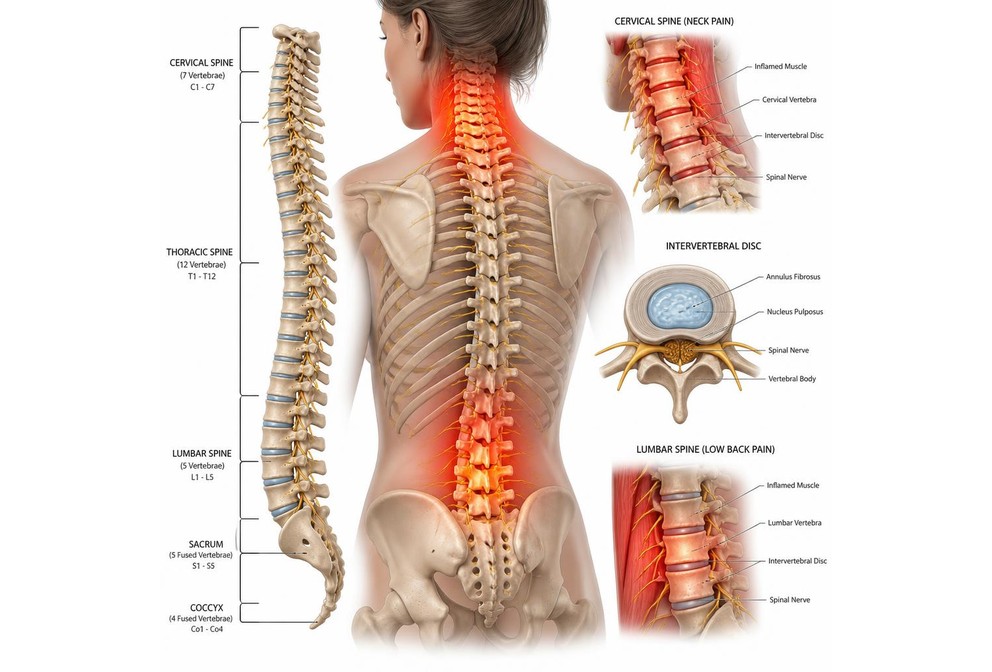
Common underlying causes
- Cervical joint restriction
- Disc irritation or age-related change
- Postural loading
- Muscle strain or guarding
- Previous whiplash or sports injury
What's usually offered — and where it falls short
Medication and heat
Limit: May reduce short-term discomfort without changing the mechanical contributor.
Self-manipulation
Limit: Repeatedly moving the easiest segments does not identify or address the restricted area.
Evaluation and care
A plan based on the findings.
- Cervical orthopedic and neurologic examination
- Low-force or instrument-assisted options when appropriate
- Decompression for selected disc-related arm symptoms
- Posture and deep-neck stabilizer training
What to expect
First visit
A focused history and examination identify the likely source and screen for findings that need referral.
Early care
Treatment is matched to the exam findings, with symptoms and function tracked rather than assumed.
Reassessment
Progress is measured and the plan is continued, changed, or referred when appropriate.
How Dr. Smith treats this differently
Our Back & Neck Relief approach for Neck Pain.
Exam-driven chiropractic care, soft-tissue work, and corrective rehab for chronic back and neck pain — built around the specific segment driving the problem.
Explore the Back & Neck Relief ProgramCommon Questions
Frequently Asked Questions
Related conditions
Clinical note: Recent trauma, unexplained neurologic symptoms, severe sudden headache, or signs of vascular risk require medical screening before cervical treatment.
Stop living around neck pain.
Start with a $47 new patient evaluation and we'll tell you honestly whether we can help.