
Joint
Chronic Knee Pain
Move through stairs, work, and recreation
with greater comfort and confidence.
Persistent knee pain can affect far more than exercise. A focused assessment can clarify what is limiting the joint and which conservative options may help.
Serving Whitefish and the Flathead Valley.

The clinical picture
Persistent symptoms have a cause — and it can be identified.
Stiffness, swelling, and grinding on stairs reflect a joint environment — cartilage wear, inflammation, muscle imbalance — that can often be improved without surgery when it is addressed directly. What's usually missing is an honest evaluation of whether a non-surgical path is still viable.
The stairs test
What chronic knee pain typically feels like day to day.
- Pain on stairs, getting up from the couch, or first steps in the morning
- Grinding, clicking, or crunching with motion
- Swelling after activity
- Sharp pain rolling over in bed at night
- Bracing on furniture or counters to stand up
What this means over time
Reluctance about knee replacement is well founded: recovery is measured in months, outcomes vary, and many patients know others who still hurt afterward. Wanting a thorough second opinion before an irreversible decision is sound judgment — and it begins with an evaluation that measures what is actually happening in the joint.
Joints that lose cushioning don't get it back on their own. Every month of unaddressed inflammation, instability, and compensatory loading makes the joint stiffer, the surrounding muscles weaker, and the eventual decision harder. The window for a non-surgical path narrows with time.
A precise evaluation is the starting point.
Dr. Smith's examination identifies the specific structures involved, measures how they're functioning, and determines — honestly — whether our care is the right fit for what you're dealing with.
Causes & clinical context
Understanding what may contribute to chronic knee pain.
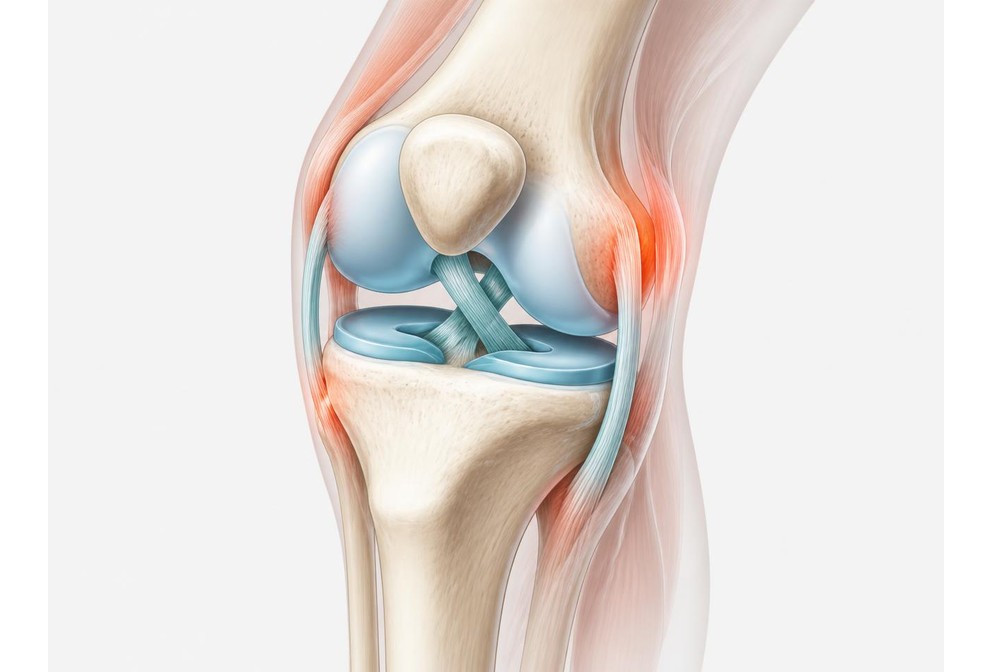
Common underlying causes
- Cartilage thinning from decades of compression and impact
- Old injuries (meniscus, ligament, kneecap) that never fully resolved
- Muscle imbalances at the hip and ankle that overload the knee
- Low-grade inflammation that prevents the joint from repairing itself
- Excess load on the joint from weight or daily activity demands
What's usually offered — and where it falls short
Cortisone or gel injections
Limit: Buy short-term relief but accelerate cartilage breakdown over time and stop working as the joint deteriorates.
Daily NSAIDs and prescription pain meds
Limit: Quiet the pain signal without changing the joint environment, and carry real long-term costs to your stomach, kidneys, and heart.
'You'll know when you're ready for a replacement'
Limit: Leaves you waiting on the joint to fail before anything is offered — when targeted care now can often delay or prevent that decision entirely.
Evaluation and care
A plan based on the findings.
- A focused history and examination
- Orthopedic and neurologic screening when indicated
- Care matched to the structures and functional findings involved
- Objective reassessment with referral when appropriate
What to expect
First visit
Examination, findings, and a clear recommendation for the appropriate next step.
During care
Symptoms and function are tracked so the plan can be adjusted as needed.
Reassessment
Progress is measured rather than assumed, with referral when goals are not being met.
How Dr. Smith treats this differently
Our Knee Pain Therapy approach for Chronic Knee Pain.
A structured non-surgical knee program combining shockwave therapy, joint mobilization, and targeted hip and ankle rehab to take load off the joint and calm inflammation.
Explore the Knee Pain Therapy ProgramCommon Questions
Frequently Asked Questions
Stop living around chronic knee pain.
Start with a $47 new patient evaluation and we'll tell you honestly whether we can help.