
Nerve
Headaches & Migraines
Headaches should be evaluated
by their pattern—not treated as all the same.
Frequency, triggers, neck involvement, and neurologic signs help determine whether conservative care is appropriate or referral is needed.
Serving Whitefish and the Flathead Valley.

The clinical picture
Persistent symptoms have a cause — and it can be identified.
Medication manages each episode without addressing the driver, and overuse can itself increase headache frequency. Identifying the mechanical source is what changes the pattern rather than repeatedly treating the symptoms.
The pattern you've memorized
What headaches & migraines typically feels like day to day.
- Tension band across the forehead or behind the eyes
- Pain that starts at the base of the skull and climbs up
- Throbbing on one side of the head with light or sound sensitivity
- Nausea, visual auras, or brain fog before or during an episode
- Neck and upper-shoulder tightness that seems to trigger the headache
- Waking up with a headache already in progress
What this means over time
Living around an unpredictable headache pattern means keeping plans provisional and medication close at hand. When the underlying cervical dysfunction and muscle guarding are identified and treated, episode frequency and intensity typically decrease — which is what actually restores reliability to your schedule, not another medication.
Recurring headaches and migraines rarely resolve on their own. Untreated cervical dysfunction, muscle guarding, and nervous-system sensitization tend to increase in frequency and intensity over time — pulling more days off the calendar and pushing medication use higher without addressing the underlying driver.
A precise evaluation is the starting point.
Dr. Smith's examination identifies the specific structures involved, measures how they're functioning, and determines — honestly — whether our care is the right fit for what you're dealing with.
Causes & clinical context
Understanding what may contribute to headaches & migraines.
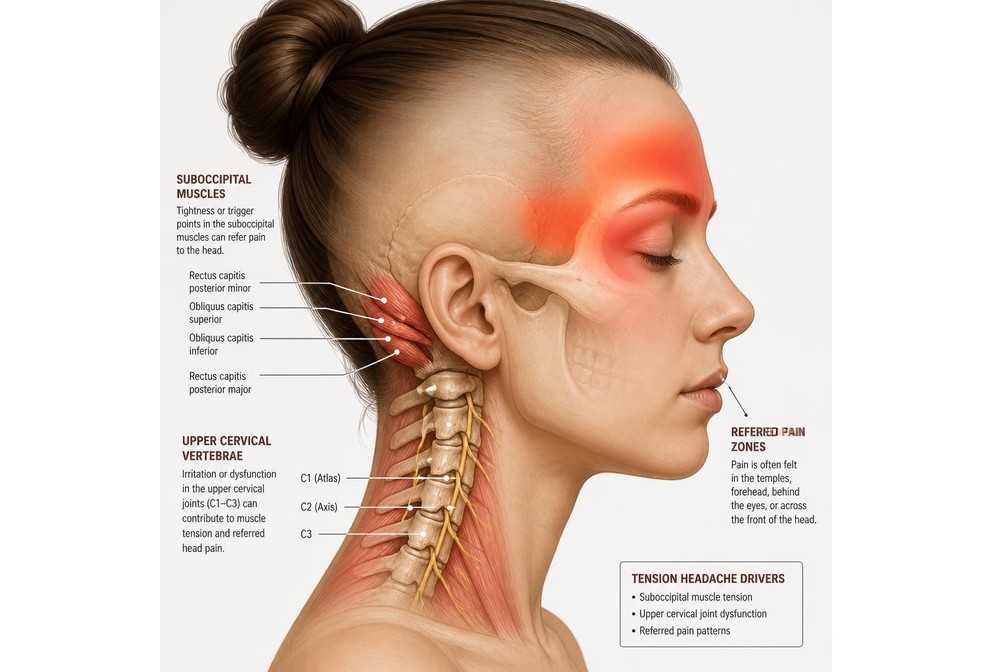
Common underlying causes
- Upper-cervical joint dysfunction referring pain into the head
- Chronic muscle tension in the neck, jaw, and upper shoulders
- Postural strain from screens, driving, and desk work
- Nervous-system sensitization amplifying pain signals
- Old whiplash or head injuries that never fully resolved
What's usually offered — and where it falls short
OTC and prescription pain relievers
Limit: Blunt the episode but don't address the mechanical or nerve driver — and long-term use can lead to rebound headaches.
Migraine-specific prescriptions and injections
Limit: Helpful for some, but often expensive, side-effect heavy, and still leave the underlying pattern in place.
'Just manage the triggers'
Limit: Avoiding wine, screens, weather, and stress isn't a treatment plan — it's a shrinking life.
Evaluation and care
A plan based on the findings.
- A focused history and examination
- Orthopedic and neurologic screening when indicated
- Care matched to the structures and functional findings involved
- Objective reassessment with referral when appropriate
What to expect
First visit
Examination, findings, and a clear recommendation for the appropriate next step.
During care
Symptoms and function are tracked so the plan can be adjusted as needed.
Reassessment
Progress is measured rather than assumed, with referral when goals are not being met.
How Dr. Smith treats this differently
Our Headaches & Migraines approach for Headaches & Migraines.
Targeted upper-cervical chiropractic care and soft-tissue work aimed at reducing the frequency and intensity of tension headaches and migraines by addressing the neck-and-nerve pattern behind them.
Explore the Headaches & Migraines ProgramCommon Questions
Frequently Asked Questions
Stop living around headaches & migraines.
Start with a $47 new patient evaluation and we'll tell you honestly whether we can help.